

Introduction
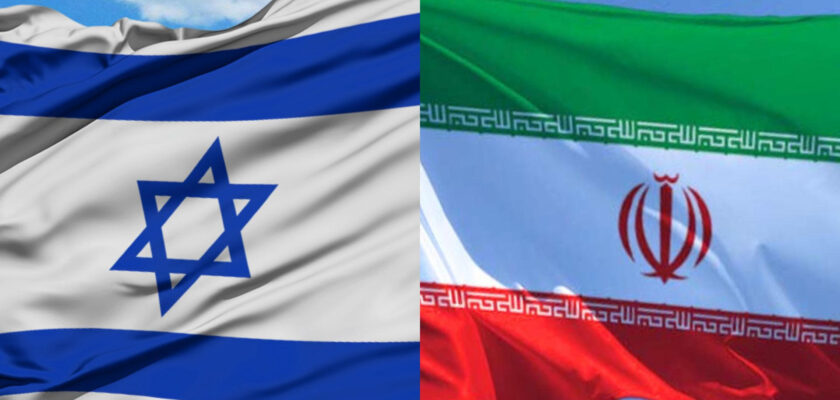
From the “shadow war” in the Red Sea to the drone duel over the Golan Heights, each new flare-up between Tehran and Jerusalem complicates the geopolitics of the Middle East. In think tanks in Washington and Tel Aviv, the conflict is described in terms of “axis of confrontation,” “nuclear deterrence,” and “strategic depth”; regional media often describe it as an ideology of “defense of Palestine” or “preemptive strike.” At the same time, different interpretations are heard in church pulpits and on social media: some preachers see this as the beginning of the countdown to Armageddon, others – just another round of world politics.
In reality, the current confrontation is a tangled web of politics, religious myth, and selective readings of Scripture. The Islamic Republic speaks the language of the “ummah,” Israel links its survival to the promises of the Old Testament, and global players write their own media scripts. Lost in this noise are the voices of millions of Iranians yearning for freedom, and the voices of Christian migrants or underground communities.
This article not only rereads Joel, Zechariah, and Revelation, but also situates them in the context of geopolitical forces, the evolution of the two states’ defense doctrines, and the rise of the region’s civic movements. We ask: does the new war fit into the biblical signs of the final battle (Armageddon) or rather reflect the cyclical fear and greed of fallen states? Furthermore, from a biblical and political perspective, the “official Iranian regime” and the “people of Iran” are different: does hostility between states mean hatred between peoples?
Finally, we will show that no balance of power, even under a nuclear umbrella, will bring lasting peace unless the nations turn to the Prince of Peace, whom the prophets foretold. We invite you to read with an open heart—perhaps the answers lie deeper than simple military and economic messages.
How the current conflict differs from the Bible’s final battle
a) Global scale. “I will gather all nations… into the valley of Jehoshaphat” (Joel 3:2); “and I will gather all nations to Jerusalem to battle” (Zechariah 14:2). Revelation speaks of an alliance of the kings of the whole earth against the “Lamb” (Revelation 16:14; 17:14). Armageddon will involve the whole world, not two countries.
b) Focus on Jerusalem and direct intervention by God. In the prophecy about Gog and Magog, the Lord declares: “In the fire of my anger I have spoken” (Ezek. 38:19). Zechariah adds: “The Lord will come out and stand on the Mount of Olives… His feet will stand on the Mount of Olives” (Zech. 14:3). There are no such overt divine acts in the current conflict.
c) Supernatural signs and a messianic finale. The great earthquake and hail weighing a talent are described in Rev. 16:18-21; then Christ, “the Word of God,” returns on a white horse (Rev. 19:11-21). Such cosmic phenomena are not observed in the Iran-Israel conflict.
Conclusion: Even the bloodiest phase of the current war is not identical to Armageddon or Gog and Magog. Scripture calls for sobriety, not for the proclamation of the “end of the world.”
The lack of a final victory in the current confrontation
James points to the root cause of wars: “from your lusts that war in your members” (James 4:1). Behind war plans lie the greed for territory, fear, and political pride. Jesus warns: “Every kingdom divided against itself will be brought to desolation” (Matthew 12:25). Even after winning the battle, a side separated from the God of peace carries within itself the seeds of destruction. Until both nations reconcile with their Creator, the spiral of violence will inevitably return to the shores of the aggressors themselves.
The People of Iran and the Rule of Law
The slogan “Death to Israel” is a product of Tehran’s ideologues, not the hearts of ordinary Iranians. Millions of students, entrepreneurs, and artists are expressing their solidarity with all who seek peace on social media platforms. This is reminiscent of the biblical distinction between “Pharaoh” and “Egypt”: the Lord commanded a harsh ruler, but through the prophet Isaiah He promised: “Blessed is my people Egypt” (Isaiah 19:25). The Psalms proclaim: “Say among the nations, ‘The Lord reigns!’” (Ps. 96:10). The desire for truth is leading many Iranians to the Gospel, which has become the basis of the largest house church movement in the region.
The Torah allows defense: “When you go out to war…” (Deut. 20:1), but introduces restrictions: first offer peace (v. 10), do not cut down fruit trees (v. 19). The New Testament deepens the principle: “Vengeance is mine” (Rom. 12:19), while the government is called “God’s servant” to punish criminals (Rom. 13:4). Thus, Israel has the right to defend itself, but every blow must be tested by the principle of “justice, mercy, and humility” (Mic. 6:8); otherwise the same Judge, who weighs enemies, will weigh the chosen people as well.
National Election and Personal Salvation
“All have sinned” (Rom. 3:23). Israel’s election is a service, not a guarantee of personal redemption. In chapters 9-11, in Romans, Paul combines God’s covenant faithfulness, his sorrow for his unbelieving countrymen, and the extension of grace to the Gentiles. Acts states, “There is no other name given by which we must be saved” (Acts 4:12). Every Jew, Persian, or Greek enters through the cross, not through lineage.
Signs of the Final War and God’s Direct Intervention
The prophets paint a holistic picture: a global battlefield in which the Lord Himself acts as Judge. “The Lord himself will go out and stand in the judgment seat” (Zech. 14:3). Joel calls on, “Let the nations be aroused and come up… for there I will sit to judge all the nations” (Joel 3:12). Then the remnant of Israel will “look upon me whom they have pierced” (Zech. 12:10), and the kingdoms of the earth will either obey the Lamb or fall (Rev. 19:19). This is not a diplomatic battle, but a triumph of God’s glory.
Conclusion
Jesus said, “You will hear of wars and rumors of wars… But the end is not yet… All these are the beginning of pangs of distress” (Matt. 24:6-8). The conflict between Iran and Israel is one such “pang,” a disturbing stimulus, but not the final scene. The apostle warned against baseless prophecies and panic (2 Thess. 2:1-3). This war is but a mirror reflecting the sin of humanity and the desperate need of both peoples—and all peoples—for reconciliation with their Creator.
The Iranian people are not the real enemy of Israel; Israel, without faith in Christ, will not escape judgment either. Lasting and solid peace is possible only under the shadow of the cross and resurrection of Jesus Christ, who “has broken down the middle wall of partition” (Eph. 2:13-16). Therefore, instead of hastily dating the end of the world, let us dedicate ourselves to prayer and evangelism, so that the light of the Gospel may shine upon both Iranians and Israelis—so that one day the voice of the Prince of Peace may drown out the roar of weapons in the Middle East and throughout the earth.

